
Estate Planning Services in Greenwood Village: Fee-Based Fiduciary Advisors Explaining the Process
By Scott Tremlett, Paramount Associates Wealth Management
Estate planning is a crucial process that ensures your assets are managed and distributed according to your wishes after your passing. In Greenwood Village, understanding the nuances of estate planning services can significantly impact families and individuals looking to secure their financial future. This article will delve into the role of fiduciary advisors in estate planning, the services they offer, and the benefits of choosing a fee-based model. By the end, readers will gain insights into how these services can help navigate the complexities of estate planning in Colorado.
Role in the Estate Planning Process
Fiduciary advisors play a vital role in the estate planning process by providing expert guidance tailored to individual client needs. They assess client circumstances, prepare necessary legal documents, and coordinate with other professionals, such as attorneys and tax advisors, to ensure a comprehensive approach. This ongoing monitoring and adjustment of plans are essential to adapt to any changes in laws or personal situations. Understanding the responsibilities of fiduciary advisors helps clients appreciate the value they bring to the estate
planning process.
Services Offered
Fiduciary advisors in Greenwood Village offer a range of estate planning services designed to meet the diverse needs of their clients. These services include:
Wills and Trusts: Establishing legal documents that dictate how assets will be
distributed.
Beneficiary Coordination: Ensuring that beneficiary designations are up-to-date and
align with the overall estate plan.
Incapacity Planning: Preparing for scenarios where clients may be unable to make
decisions for themselves.
Tax Planning: Developing strategies to minimize tax liabilities associated with estate
transfers.
These services are crucial for families in Colorado, as they provide a structured approach to managing and distributing assets effectively.
Comprehensive Estate Planning Services
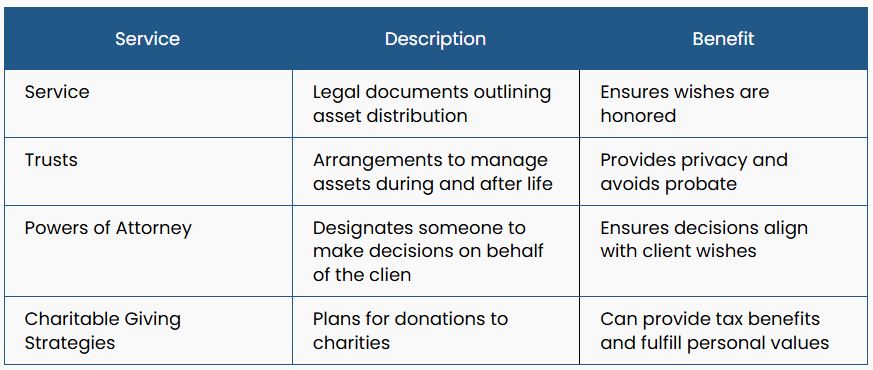
Comprehensive estate planning encompasses various elements that work together to protect
and manage a client's wealth. Key components include:
Service
Description
Benefit
Service
Legal documents outlining
asset distribution
Ensures wishes are honored
Trusts
Arrangements to manage
assets during and after life
Provides privacy and avoids probate
Powers of Attorney
Designates someone to make decisions on behalf of the clien
Ensures decisions align with client wishes
Charitable Giving Strategies
Plans for donations to
charities
Can provide tax benefits and fulfill personal values
This table illustrates how each service contributes to a holistic estate planning strategy, ensuring that all aspects of a client's wishes are addressed.
Benefits of Working with Fee-Based Fiduciary Advisors
Choosing fee-based fiduciary advisors for estate planning offers several advantages. These professionals operate under a fiduciary duty, meaning they are legally obligated to act in the best interests of their clients. This alignment of interests fosters a relationship built on trust and ransparency. Additionally, fee-based models eliminate potential conflicts of interest that can arise from commission-based structures, allowing for a more client-centric approach to financial planning.
Further insights into the structure of advisor compensation highlight how fees are determined in
estate planning.
Estate Planning Fees for Financial Advisors
to legal matters such as estate planning. Other professionals on an ongoing basis may charge a fee based on the size of the
Financial planners and advisors, 2017
What Defines a Fee-Based Registered Investment
Advisor in Colorado?
A fee-based Registered Investment Advisor (RIA) in Colorado is characterized by its compensation structure, which relies solely on advisory fees rather than commissions from product sales. This model promotes transparency and aligns the advisor's incentives with the client's financial goals. Fee-based RIAs are also subject to regulatory requirements that ensure they adhere to ethical standards in their advisory practices. Understanding these definitions helps clients make informed decisions when selecting an advisor for their estate planning needs.
How Does a Fee-Based Model Ensure Transparent Wealth Management Fees?
The fee-based model ensures transparency in wealth management fees by providing clear disclosures about the costs associated with advisory services. Clients are charged directly for the services rendered, which reduces the likelihood of hidden fees or conflicts of interest. This clarity allows clients to understand exactly what they are paying for and how it aligns with their financial objectives. By fostering an environment of openness, fee-based advisors can build stronger, trust-based relationships with their clients.
While fee-based models offer transparency, it's also important to consider how this compensation structure impacts overall costs for investors.
Understanding Fee-Based Fiduciary Accounts
Shifting investors toward fee-based fiduciary accounts may increase costs for some of them. Fee-based compensation separates investment advisers' income.
The Fiduciary Rule Controversy and the Future of Investment Advice, Q Curtis, 2019
Why Choose a Registered Investment Advisor in Denver Metro for Estate Planning?
Selecting a Registered Investment Advisor in the Denver Metro area for estate planning offers numerous benefits. These professionals possess local expertise and a deep understanding of Colorado's estate laws, which can significantly impact the planning process. Additionally, RIAs provide comprehensive services that integrate financial planning with estate management, ensuring a cohesive strategy that addresses all aspects of a client's financial life. This holistic approach is particularly beneficial for families looking to secure their financial future.
How Does Fiduciary Duty Shape Estate Planning Services in Greenwood Village?
Fiduciary duty shapes estate planning services by prioritizing the client's best interests above all else. This commitment to ethical practices ensures that clients receive personalized recommendations tailored to their unique circumstances. Fiduciary advisors are required to disclose any potential conflicts of interest and provide transparent fee structures, fostering a relationship built on trust. This ethical framework is essential for clients seeking reliable guidance in navigating the complexities of estate planning.
What Are the Client Benefits of Fiduciary Financial Advisors?
Clients who work with fiduciary financial advisors enjoy several key benefits:
Client-First Recommendations: Advisors prioritize the client's needs and goals in all
planning decisions.
Transparent Fee Structures: Clear disclosures about fees help clients understand the
costs associated with services.
Best-Interest Advice: Fiduciary advisors are obligated to provide recommendations that
align with the client's best interests.
These benefits highlight the value of working with fiduciary advisors, particularly in the context of estate planning.
How Does Paramount Associates Uphold Ethical Wealth Management Practices?
Paramount Associates upholds ethical wealth management practices by providing personalized guidance that aligns with clients' financial goals. The firm emphasizes comprehensive coordination among various financial aspects, ensuring that clients receive well-rounded advice. Transparency and education are also central to their approach, as they strive to empower clients with the knowledge needed to make informed decisions about their estate planning.
What Is the Estate Planning Process in Colorado with Paramount Associates?
The estate planning process in Colorado with Paramount Associates typically involves several key steps:
Initial Contact and Intake: Clients begin by discussing their goals and concerns with an
advisor.
Discovery Meeting: A thorough assessment of the client's financial situation and estate
planning needs is conducted.
Implementation and Monitoring: The advisor helps implement the estate plan and
monitors it for any necessary adjustments over time.
This structured approach ensures that clients receive tailored advice that evolves with their changing circumstances.
Which Services Are Included in Comprehensive Estate Planning?
Comprehensive estate planning includes a variety of services designed to address all aspects of a client's financial life. Key services typically include:
Wills and Trusts: Establishing legal frameworks for asset distribution.
Beneficiary Designations: Ensuring that all beneficiary information is current and
accurate.
Charitable Giving Strategies: Planning for philanthropic goals while maximizing tax
benefits.
These services work together to create a robust estate plan that reflects the client's wishes and financial objectives.
How Is Charitable Giving Integrated into Trust and Estate Plans?
Charitable giving can be seamlessly integrated into trust and estate plans, allowing clients to fulfill their philanthropic goals while also benefiting from potential tax advantages. Strategies may include establishing charitable trusts or donor-advised funds, which provide flexibility in how and when donations are made. This integration not only aligns with the client's values but also enhances the overall effectiveness of the estate plan.
Wills & Trusts: Choosing the Right Estate Planning Tools in Greenwood Village
When it comes to estate planning, choosing between wills and trusts is a critical decision. Wills are legal documents that outline how assets will be distributed upon death, while trusts can manage assets during a person's lifetime and after. Each tool has its advantages and disadvantages, and the choice often depends on individual circumstances and goals. Understanding these differences is essential for making informed decisions about estate planning.
Living Trusts vs. Wills: Which Is Right for Your Colorado Estate?
Living trusts and wills serve different purposes in estate planning. A living trust allows for the management of assets during a person's lifetime and can help avoid probate, while a will only takes effect after death. Factors influencing the choice between the two include the complexity of the estate, privacy concerns, and the desire for control over asset distribution. Evaluating these factors can help individuals determine the best option for their estate planning needs.
Revocable vs. Irrevocable Trusts: Understanding Your Options
Revocable and irrevocable trusts offer distinct advantages and disadvantages. Revocable trusts allow the grantor to retain control over the assets and make changes as needed, while irrevocable trusts provide greater asset protection and potential tax benefits but cannot be altered once established. Understanding these differences is crucial for individuals considering trust options in their estate planning.
Tax Implications of Estate Planning in Colorado and at the Federal Level
Estate planning involves various tax considerations that can significantly impact the distribution of assets. In Colorado, estate tax laws do not currently impose a state estate tax, but understanding federal estate tax laws and the implications of estate planning is essential for effective planning. Strategies for minimizing tax liabilities can include gifting strategies, charitable donations, and the use of trusts. Consulting with a fiduciary advisor can help navigate
these complexities.
How Does Portfolio and Business Succession Planning Integrate with Estate Services?
Portfolio and business succession planning are integral components of a comprehensive estate plan. These strategies ensure that a client's investments and business interests are managed effectively and passed on according to their wishes. By integrating these elements into the estate planning process, clients can achieve long-term wealth preservation and a smooth transition of assets to heirs or successors.
What Role Does Portfolio Management Play in Long- Term Wealth Preservation?
Effective portfolio management is essential for long-term wealth preservation, as it involves strategic asset allocation, diversification, and ongoing monitoring. A well-managed portfolio can help mitigate risks and enhance returns, ensuring that clients' financial goals are met over time. Understanding the role of portfolio management in estate planning is crucial for individuals looking to secure their financial future.
How Is Business Succession Planning Addressed for Colorado Clients?
Business succession planning is a critical aspect of estate planning for business owners in Colorado. This process involves assessing the value of the business, developing a succession strategy, and coordinating with legal and tax advisors to ensure a smooth transition. By addressing these elements, business owners can protect their legacy and ensure that their business continues to thrive after their passing.


